Chicken Thigh Nutrition: Complete Breakdown for Boneless Skinless, Bone-In & More
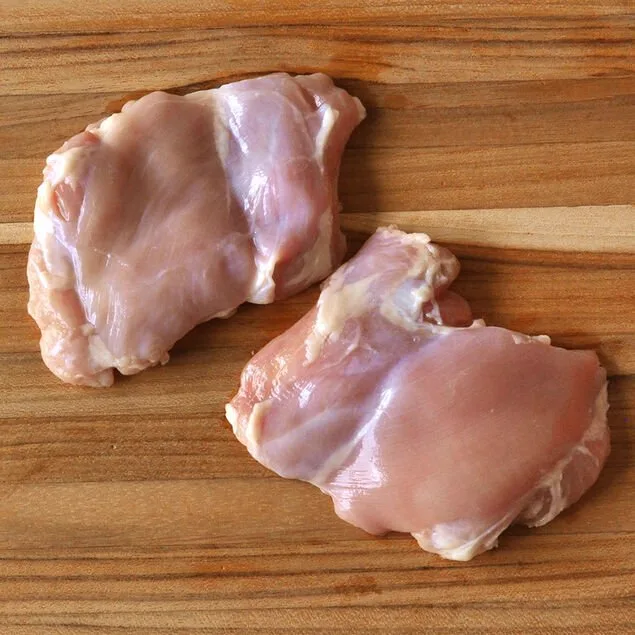
Short answer: One average cooked boneless skinless chicken thigh (about 100 g) has 209 calories, 26 g of protein and 10.9 g of fat. Bone-in with the skin on, the same weight of meat comes to 247 calories and 15.5 g of fat. Raw thigh is 119 calories per 100 g — cooking concentrates everything.
Free tool: 2-minute metabolic assessment — get your personal calorie, protein and meal targets in 2 minutes.
Chicken thighs are one of the most popular and affordable protein sources worldwide. But the nutrition profile changes significantly depending on whether you eat them boneless and skinless, bone-in with skin, raw or cooked. This guide breaks down every variation — per portion, per cooking method, and against the other proteins people track — so you can log them accurately.
Medical Disclaimer: This article is for informational purposes only and does not constitute medical advice. Consult a registered dietitian or healthcare provider for personalized dietary guidance.
Boneless Skinless Chicken Thigh Nutrition (Cooked)
This is the most commonly tracked form. Per 100 g of cooked boneless skinless chicken thigh:
| Nutrient | Amount |
|---|---|
| Calories | 209 kcal |
| Protein | 26.0 g |
| Total Fat | 10.9 g |
| Saturated Fat | 3.0 g |
| Cholesterol | 135 mg |
| Sodium | 84 mg |
| Iron | 1.3 mg |
| Zinc | 3.2 mg |
| Vitamin B6 | 0.4 mg |
| Vitamin B12 | 0.6 µg |
| Niacin (B3) | 7.2 mg |
A single boneless skinless chicken thigh weighs approximately 85–115 g cooked (120–150 g raw), providing roughly 180–240 calories and 22–30 g of protein.
Source: USDA FoodData Central, SR Legacy — Chicken, thigh, meat only, cooked, roasted. FDC ID: 171468.
Calories by Portion: One Thigh, Two Thighs, 4 oz, 6 oz
Most people do not eat exactly 100 g. These are the portions worth memorising, all boneless, skinless and cooked:
| Portion | Weight (cooked) | Calories | Protein | Fat |
|---|---|---|---|---|
| Small thigh | 85 g | 178 kcal | 22.1 g | 9.3 g |
| Average thigh | 100 g | 209 kcal | 26.0 g | 10.9 g |
| Large thigh | 115 g | 240 kcal | 29.9 g | 12.5 g |
| 4 oz serving | 113 g | 236 kcal | 29.4 g | 12.3 g |
| Two average thighs | 200 g | 418 kcal | 52.0 g | 21.8 g |
| 6 oz serving | 170 g | 355 kcal | 44.2 g | 18.5 g |
| Three average thighs | 300 g | 627 kcal | 78.0 g | 32.7 g |
Bone-in, skin-on thighs are usually sold at 150–190 g raw each. After cooking and removing the bone, expect 90–120 g of edible meat, or roughly 220–300 calories per thigh with the skin eaten.
Raw vs Cooked: Why the Numbers Change
Raw chicken thigh has a higher water content. During cooking, water evaporates and the meat shrinks by approximately 25–30% in weight. This concentrates the nutrients per gram.
| Metric (per 100 g) | Raw | Cooked (Roasted) |
|---|---|---|
| Calories | 119 kcal | 209 kcal |
| Protein | 19.7 g | 26.0 g |
| Total Fat | 3.9 g | 10.9 g |
| Water | 76.0 g | 60.7 g |
Key point: Always track chicken by its cooked weight unless your tracking app specifies raw. Logging raw weight with a cooked nutrition entry (or vice versa) is one of the most common calorie-tracking mistakes.
Bone-In Skin-On Chicken Thigh Nutrition
Keeping the skin on adds significant fat and calories. Per 100 g cooked bone-in, skin-on chicken thigh:
| Nutrient | Amount |
|---|---|
| Calories | 247 kcal |
| Protein | 24.2 g |
| Total Fat | 15.5 g |
| Saturated Fat | 4.3 g |
| Cholesterol | 141 mg |
The skin alone contributes roughly 40–60 extra calories per thigh, mostly from fat. If you are tracking macros for fat loss, removing the skin is one of the simplest ways to reduce calorie intake without sacrificing protein.
Source: USDA FoodData Central — Chicken, thigh, meat and skin, cooked, roasted. FDC ID: 171470.
Chicken Thigh vs Chicken Breast: Side-by-Side
This is the comparison most people want. Per 100 g cooked, boneless skinless:
| Nutrient | Chicken Thigh | Chicken Breast |
|---|---|---|
| Calories | 209 kcal | 165 kcal |
| Protein | 26.0 g | 31.0 g |
| Total Fat | 10.9 g | 3.6 g |
| Saturated Fat | 3.0 g | 1.0 g |
| Iron | 1.3 mg | 1.0 mg |
| Zinc | 3.2 mg | 1.0 mg |
Chicken breast wins on: Lower calories, higher protein per gram, lower fat — ideal for strict cutting phases.
Chicken thigh wins on: Higher iron and zinc content, more flavor and moisture (less likely to overcook), generally cheaper per pound, and more satiating for many people due to higher fat content.
For most people who are not in a strict calorie deficit, chicken thighs are a perfectly healthy protein choice. The extra 44 calories per 100 g is negligible in the context of a well-structured diet.
For the full breakdown of the leaner cut — raw vs cooked weights, skin-on numbers, and cooking-method macros — see our chicken breast nutrition guide.
How Chicken Thigh Compares to Other Everyday Proteins
Per 100 g cooked, against the other proteins people track most often:
| Food | Calories | Protein | Fat |
|---|---|---|---|
| Chicken thigh (skinless) | 209 kcal | 26.0 g | 10.9 g |
| Chicken breast (skinless) | 165 kcal | 31.0 g | 3.6 g |
| Salmon (farmed Atlantic) | 206 kcal | 22.1 g | 12.4 g |
| Greek yogurt (nonfat, plain) | 59 kcal | 10.2 g | 0.4 g |
Chicken thigh sits between breast and salmon: more fat than breast, but the fat is not the omega-3 kind that salmon supplies. If you rotate proteins across the week, you cover the micronutrient gaps each one leaves.
Micronutrients in Chicken Thighs
Chicken thighs are not just about protein and fat. They provide meaningful amounts of several micronutrients:
B Vitamins
- Niacin (B3): 7.2 mg per 100 g cooked (45% Daily Value). Essential for energy metabolism and DNA repair.
- Vitamin B6: 0.4 mg (24% DV). Critical for amino acid metabolism and neurotransmitter production.
- Vitamin B12: 0.6 µg (25% DV). Required for red blood cell formation and neurological function.
Minerals
- Zinc: 3.2 mg (29% DV). Supports immune function and wound healing. Thighs provide 3x more zinc than breast meat.
- Iron: 1.3 mg (7% DV). Heme iron from animal sources is absorbed 2–3x more efficiently than plant-based non-heme iron.
- Selenium: 25.5 µg (46% DV). An antioxidant mineral that supports thyroid function.
- Phosphorus: 196 mg (16% DV). Important for bone health and ATP production.
How Cooking Method Affects Nutrition
The way you cook chicken thighs changes the final nutrition profile:
| Method | Calories per 100 g | Fat | Notes |
|---|---|---|---|
| Roasted (no oil) | 209 | 10.9 g | Best for accurate tracking |
| Grilled | 212 | 11.2 g | Minimal calorie change; some fat drips away |
| Air-fried (no added oil) | 210 | 11.0 g | Effectively the same as roasting |
| Air-fried (1 tsp oil sprayed) | 240 | 14.5 g | The oil, not the appliance, adds the calories |
| Braised or stewed | 205 | 10.5 g | Lower if you skim the fat off the sauce |
| Slow-cooked | 200 | 10.2 g | Retains moisture, slightly lower fat if drained |
| Poached | 198 | 10.0 g | Some fat renders into the liquid |
| Pan-fried (1 tsp oil) | 240 | 14.5 g | Oil adds ~40 kcal per tsp |
| Deep-fried (breaded) | 280–350 | 18–24 g | Batter absorbs oil — the largest change by far |
For the most accurate tracking: Weigh your chicken thighs after cooking, use a method without added oil, and log the cooked weight in your tracking app. The appliance almost never matters; the added fat does.
Chicken Thigh in Meal Prep: Practical Portions
Here is what typical portions look like for common goals:
| Goal | Portion (cooked) | Calories | Protein |
|---|---|---|---|
| Fat loss | 100–120 g | 209–250 kcal | 26–31 g |
| Maintenance | 140–170 g | 293–355 kcal | 36–44 g |
| Muscle gain | 170–220 g | 355–460 kcal | 44–57 g |
Chicken thighs hold up better than breast in meal prep because they retain moisture when reheated. This makes them a practical choice for people who batch-cook meals for the week.
Who Should Choose Thighs Over Breast
The right cut depends on what you are managing, not on which one is "cleaner".
Thighs are the better choice if you are:
- Low in iron, or lose a lot through heavy periods. Dark meat carries more haem iron, which is absorbed two to three times more efficiently than iron from plants (NIH Office of Dietary Supplements, 2023). See our iron deficiency diet guide.
- Managing Hashimoto's or another thyroid condition. Thighs carry roughly three times the zinc of breast and a useful amount of selenium, both of which matter for thyroid hormone conversion. See the Hashimoto's diet plan, or start with a ready-made Hashimoto's 7-day meal plan that uses chicken thighs twice. If you take thyroid medication, levothyroxine and coffee timing explains how far meals should sit from your tablet, and selenium for Hashimoto's covers how much selenium is actually useful. For quick morning meals that fit around your tablet, see these Hashimoto's breakfast ideas.
- Struggling to eat enough during illness, recovery or appetite loss — the higher fat content makes the same protein easier to finish.
- Batch-cooking for the week, where breast dries out and thighs do not.
Breast is the better choice if you are:
- Taking a GLP-1 medication such as semaglutide or tirzepatide, where high-fat meals commonly worsen nausea and early fullness. See protein on GLP-1.
- Managing gastritis, reflux or gallbladder problems, where lower-fat protein is usually better tolerated. See the gastritis diet.
- Working to a specific saturated fat target, for example with fatty liver disease — see the fatty liver diet.
- Maximising protein per calorie in a tight deficit: 31 g for 165 kcal is hard to beat.
If you want the longer version of this comparison, including what actually makes a chicken meal unhealthy, read are chicken thighs healthy?
Cooking Temperature and Food Safety
Thighs are more forgiving than breast, but the safety threshold is the same.
| Target | |
|---|---|
| Minimum safe internal temperature | 74 °C / 165 °F |
| Best texture for thigh meat | 79–85 °C / 175–185 °F |
| Where to measure | Thickest part, not touching bone |
| Safe fridge storage, raw | 1–2 days |
| Safe fridge storage, cooked | 3–4 days |
| Reheat to | 74 °C / 165 °F throughout |
Poultry is safe at 74 °C / 165 °F (USDA Food Safety and Inspection Service). Thighs taste better taken past that — the connective tissue breaks down around 79–85 °C, which is why they stay tender when breast would be dry. Cooking further does not meaningfully change the calorie or protein numbers; only added fat does.
Colour is not a doneness test. Thigh meat can stay slightly pink near the bone at a perfectly safe temperature, and pale meat can be undercooked. Use a thermometer.
Frequently Asked Questions
How many calories are in one boneless skinless chicken thigh?
One average boneless skinless chicken thigh (about 100 g cooked) contains approximately 209 calories, 26 g of protein, and 10.9 g of fat according to USDA data.
Is chicken thigh healthier than chicken breast?
Neither is objectively healthier. Chicken breast has fewer calories and more protein per gram, making it better for strict fat loss. Chicken thigh has more iron, zinc, and B vitamins, plus better flavor and moisture retention. Both are excellent protein sources.
Should I weigh chicken thighs raw or cooked?
Weigh cooked for the most accurate tracking. Raw chicken loses 25–30% of its weight during cooking due to water evaporation. If you weigh raw, use a raw nutrition entry in your tracking app.
How much protein is in 200 g of cooked chicken thigh?
Approximately 52 g of protein, based on the USDA value of 26 g protein per 100 g of cooked boneless skinless chicken thigh.
Does removing the skin make a big difference?
Yes. Removing the skin reduces calories by roughly 40–60 per thigh and cuts total fat by about 4–5 g. For people in a calorie deficit, this adds up over multiple servings.
How many calories are in two chicken thighs?
Two average cooked boneless skinless thighs — about 200 g — come to roughly 418 calories, 52 g of protein and 21.8 g of fat. Bone-in with the skin eaten, expect 440–600 calories depending on thigh size.
How much does a chicken thigh weigh?
A boneless skinless thigh is typically 120–150 g raw and 85–115 g cooked, losing 25–30% of its weight to water. Bone-in, skin-on thighs are usually 150–190 g raw and yield 90–120 g of edible meat.
What temperature should chicken thighs be cooked to?
74 °C / 165 °F is the minimum safe internal temperature. Thighs taste better cooked to 79–85 °C, where the connective tissue breaks down. Measure at the thickest part away from the bone — colour is not a reliable test.
Are chicken thighs good for building muscle?
Yes. At 26 g of protein per 100 g, two thighs deliver over 50 g — more than enough to maximise a single meal's muscle protein synthesis response. The extra fat is only a consideration if your overall calorie budget is tight.
Do air-fried chicken thighs have fewer calories?
Only if you use less oil. Air-frying without added oil gives virtually the same numbers as roasting, about 210 kcal per 100 g. The saving compared with deep-frying comes from skipping the batter and the oil it absorbs, not from the appliance itself.
Is chicken thigh high in cholesterol?
A 100 g cooked skinless thigh has about 135 mg of cholesterol. Dietary cholesterol has a smaller effect on blood cholesterol than was once assumed for most people; saturated fat intake and overall diet pattern matter more.
Related Guides
- Are chicken thighs healthy? — the honest answer on fat, sodium and preparation
- Chicken breast nutrition — the leaner cut, fully broken down
- How much protein per day — working out your own target
- Salmon nutrition — the omega-3 protein worth rotating in
- Calorie counting vs macro tracking — which approach fits your goal
Reviewed and maintained by the Nutrition.io Editorial Team. See our editorial policy for how we research, source, and update this guide.
Download Nutrition.io on the App Store to instantly scan your meals and get accurate macro breakdowns — including chicken thighs cooked any way you like.
Free printable: Food Safety & Timing Guide (PDF) — thyroid and gut food evidence, the levothyroxine and supplement timing chart, a shopping checklist and a one-week symptom log.