Salmon Nutrition: Calories, Protein, Omega-3s and Farmed vs Wild
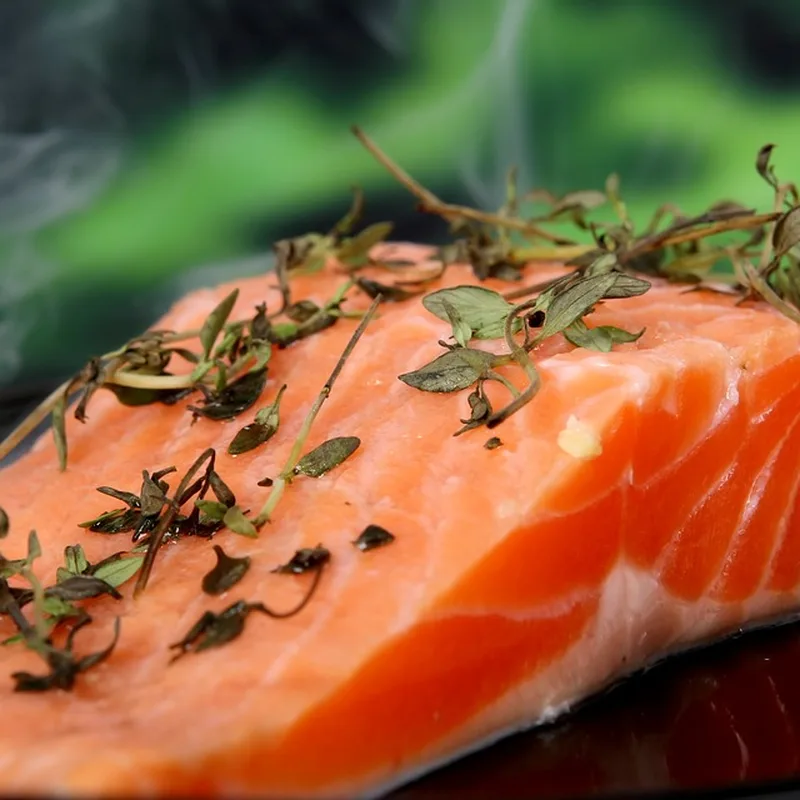
Salmon is the rare food that is both a high-protein staple and one of the densest dietary sources of long-chain omega-3 fats. But "salmon" covers half a dozen species with meaningfully different numbers — farmed Atlantic has nearly twice the fat of wild sockeye. This guide lays out the USDA data for every common variety and form.
Free tool: 2-minute metabolic assessment — get your personal calorie, protein and meal targets in 2 minutes.
Medical Disclaimer: This article is for informational purposes only and does not constitute medical advice. Consult a registered dietitian or healthcare provider for personalized dietary guidance.
Key Takeaways
- 100 g cooked farmed Atlantic salmon: 206 kcal, 22.1 g protein, 12.4 g fat, ~2.3 g EPA + DHA.
- Wild sockeye is leaner: 156 kcal and 5.6 g fat per 100 g, with ~1.0 g EPA + DHA.
- Farmed salmon usually delivers more total omega-3 per serving; wild has a better omega-3 to omega-6 ratio.
- Salmon is one of the few substantial food sources of vitamin D — 400–700 IU per 100 g depending on species.
- Two servings of oily fish per week is the standard clinical recommendation for cardiovascular benefit.
Farmed Atlantic Salmon (Cooked)
Per 100 g cooked with dry heat:
| Nutrient | Amount | % Daily Value |
|---|---|---|
| Calories | 206 kcal | 10% |
| Protein | 22.1 g | 44% |
| Total Fat | 12.4 g | 16% |
| Saturated Fat | 3.1 g | 16% |
| Omega-3 (EPA + DHA) | 2.3 g | — |
| Carbohydrate | 0 g | 0% |
| Cholesterol | 63 mg | 21% |
| Sodium | 61 mg | 3% |
| Vitamin D | 526 IU | 66% |
| Vitamin B12 | 3.2 µg | 133% |
| Selenium | 41.4 µg | 75% |
| Potassium | 384 mg | 8% |
Source: USDA FoodData Central — Fish, salmon, Atlantic, farmed, cooked, dry heat (FDC ID 175168).
Wild vs Farmed Salmon: Side by Side
Per 100 g cooked:
| Nutrient | Farmed Atlantic | Wild Atlantic | Wild Sockeye | Wild Coho |
|---|---|---|---|---|
| Calories | 206 kcal | 182 kcal | 156 kcal | 139 kcal |
| Protein | 22.1 g | 25.4 g | 26.5 g | 23.5 g |
| Total Fat | 12.4 g | 8.1 g | 5.6 g | 4.3 g |
| Saturated Fat | 3.1 g | 1.3 g | 0.9 g | 0.9 g |
| EPA + DHA | ~2.3 g | ~1.8 g | ~1.0 g | ~1.1 g |
| Vitamin D | 526 IU | ~988 IU | ~670 IU | ~430 IU |
How to read this: farmed salmon carries more total fat and therefore more absolute omega-3 per serving, because farmed fish are fed high-fat diets. Wild salmon is leaner, higher in protein per gram, and lower in omega-6 fatty acids, giving a more favourable omega-3:omega-6 ratio. Neither is "the healthy one" — farmed is the cheaper route to your weekly omega-3 target, wild is the leaner protein.
Canned, Smoked and Raw Salmon
| Form (per 100 g) | Calories | Protein | Fat | Sodium |
|---|---|---|---|---|
| Raw farmed Atlantic | 208 kcal | 20.4 g | 13.4 g | 59 mg |
| Cooked farmed Atlantic | 206 kcal | 22.1 g | 12.4 g | 61 mg |
| Canned pink, drained | 139 kcal | 19.8 g | 6.1 g | 340 mg |
| Canned sockeye, drained | 167 kcal | 22.0 g | 8.2 g | 330 mg |
| Cold-smoked (lox) | 117 kcal | 18.3 g | 4.3 g | 1,700 mg |
Two things stand out. Canned salmon with bones is one of the best non-dairy calcium sources available — roughly 210 mg per 100 g from the softened bones. Smoked salmon is the sodium outlier: a 100 g serving can supply about 74% of the daily sodium limit, which matters for anyone managing blood pressure.
Omega-3s: How Much You Actually Need
Major guidelines converge on 250–500 mg of combined EPA and DHA per day for general cardiovascular health, which is where the "two servings of oily fish per week" advice comes from.
| Salmon type | 140 g serving delivers | Servings/week for 500 mg/day |
|---|---|---|
| Farmed Atlantic | ~3.2 g EPA+DHA | 1 |
| Wild Atlantic | ~2.5 g | 1–2 |
| Wild sockeye | ~1.4 g | 2–3 |
| Canned pink | ~1.5 g | 2–3 |
EPA and DHA are the forms your body uses directly. Plant omega-3 (ALA, from flax or walnuts) converts to EPA at roughly 5–10% and to DHA at under 1%, which is why oily fish is hard to replace with seeds alone.
Vitamin D: Salmon's Underrated Advantage
Very few foods contain meaningful vitamin D. Salmon is the exception, supplying 400–1,000 IU per 100 g depending on species and whether it is wild or farmed. For anyone with limited sun exposure or confirmed low levels, two salmon meals a week make a measurable contribution — see our guide to vitamin D deficiency symptoms for the lab context.
Cooking Method and Final Macros
| Method | Calories per 100 g | Notes |
|---|---|---|
| Baked / roasted, no oil | 206 | The USDA reference value |
| Grilled | 208 | Some fat renders out |
| Poached | 200 | Retains moisture, no added fat |
| Pan-seared, 1 tsp oil | 245 | Absorbed oil adds ~40 kcal |
| Air-fried, no oil | 210 | Comparable to roasting |
Omega-3 fats are heat-sensitive but survive normal home cooking well. Deep-frying is the exception: prolonged high heat degrades a measurable share of EPA and DHA and swamps the profile with the frying oil's fatty acids.
Mercury and Contaminants
Salmon sits in the low-mercury category on FDA and EPA guidance and is on the "best choices" list for pregnant people and children — typically 2–3 servings per week. This is a genuine advantage over larger predatory fish such as swordfish, king mackerel, and bigeye tuna, where intake limits are strict.
Where Salmon Fits in a Condition-Specific Diet
- Anti-inflammatory eating: EPA and DHA are the mechanistic centrepiece of most anti-inflammatory diet protocols.
- Hashimoto's and thyroid conditions: high selenium content supports thyroid hormone conversion.
- PCOS and insulin resistance: a high-protein, low-carbohydrate meal anchor that supports satiety.
- GLP-1 medications: dense protein in a small volume, which helps when appetite is suppressed.
Frequently Asked Questions
How many calories are in a salmon fillet?
A typical 170 g (6 oz) cooked farmed Atlantic fillet contains about 350 calories and 38 g of protein. The same size wild sockeye fillet is around 265 calories.
Is farmed or wild salmon healthier?
Both are good choices. Farmed salmon supplies more total omega-3 per serving; wild salmon is leaner, higher in protein per gram, and has a better omega-3 to omega-6 ratio. Consistency matters more than the category — the salmon you actually eat twice a week beats the one you buy occasionally.
How much salmon should I eat per week?
Most guidelines recommend two servings of oily fish per week, roughly 140 g each. Salmon is low in mercury, so 2–3 servings weekly is generally considered safe, including in pregnancy.
Is canned salmon as nutritious as fresh?
Nutritionally it is very close, and canned salmon with bones adds substantial calcium. The trade-offs are higher sodium and, in pink salmon, a lower fat and omega-3 content than fresh Atlantic.
Does salmon skin have nutritional value?
Yes. The skin and the fat layer beneath it concentrate omega-3 fats, and eating it adds roughly 30–50 calories per serving. It is safe to eat from low-contaminant species like salmon.
How much protein is in 200 g of cooked salmon?
About 44 g for farmed Atlantic and roughly 53 g for wild sockeye, which is leaner and therefore more protein-dense per gram.
Compare with other high-protein staples
- Chicken breast nutrition — leanest common protein
- Chicken thigh nutrition — higher fat, more iron and zinc
- Greek yogurt nutrition — fermented dairy protein
- How much protein per day — set your daily target first
Sources
- USDA FoodData Central: Fish, salmon, Atlantic, farmed, cooked, dry heat (FDC ID 175168).
- USDA FoodData Central: Fish, salmon, sockeye, cooked, dry heat (FDC ID 173692).
- Rimm EB et al. Seafood long-chain n-3 polyunsaturated fatty acids and cardiovascular disease: an AHA science advisory. Circulation. 2018;138(1):e35-e47. https://pubmed.ncbi.nlm.nih.gov/29773586/
- Calder PC. Omega-3 fatty acids and inflammatory processes. Nutrients. 2010;2(3):355-374. https://pubmed.ncbi.nlm.nih.gov/22254027/
Reviewed and maintained by the Nutrition.io Editorial Team. See our editorial policy for how we research, source, and update this guide.
Download Nutrition.io on the App Store and scan any fish for instant nutrition data — the AI tells the difference between farmed and wild portions and logs the omega-3s for you.